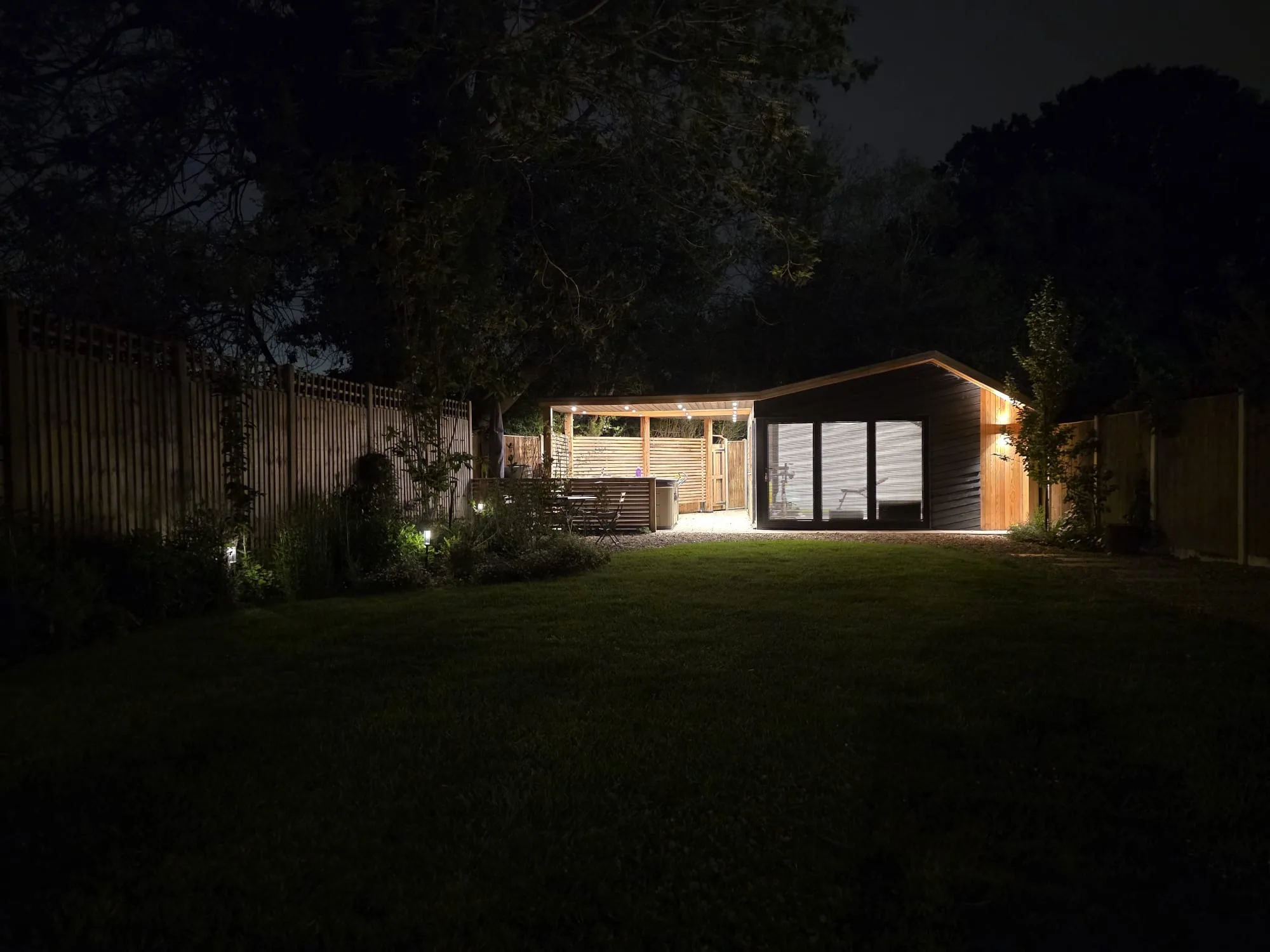
Most Garden Rooms Don't Need Planning Permission
Under Permitted Development (PD) rights, homeowners can add outbuildings like garden rooms without applying for planning permission, provided certain conditions are met. The vast majority of builds we complete fall comfortably within PD — we design with this in mind from the start.
Permitted Development Conditions
When Planning Permission IS Required
The 2m Boundary Rule Explained
If any part of the building is within 2m of your property boundary, the maximum height is 2.5m to the eaves (and to the highest point for a flat roof). This affects the roof style but not necessarily the footprint.
We regularly design builds close to boundaries — a low-pitch or flat roof keeps everything within PD while still giving you a spacious internal height. We'll advise on your specific plot during the site visit.
Height Rules at a Glance
When Permission Is Required — We Help
If your project does need full planning consent, we work with a specialist planning consultant who handles the entire process. Their service includes:
Lawful Development Certificates & Article 4 Directions
What is a Lawful Development Certificate?
An LDC is written confirmation from your local planning authority that a structure complies with Permitted Development rules. You don't legally need one to build — but it proves compliance on paper, which can be useful when you sell the property.
Buyers' solicitors sometimes ask for evidence that outbuildings were built lawfully. An LDC removes that question entirely. We can advise on whether it's worth obtaining for your project after the site visit.
What is an Article 4 Direction?
An Article 4 Direction is a planning measure that removes Permitted Development rights in a specific area — typically conservation areas or areas of special architectural interest. If your property is subject to one, work that would normally be permitted may need full planning permission.
You can check whether your property is in an area with an Article 4 Direction via the Planning Portal, or ask us during the free site visit — we're familiar with the local planning landscape across Surrey.
Planning Permission — Common Questions
Does a garden room need building regulations approval?
Generally no. Garden rooms that fall within Permitted Development and are under 15m² (or up to 30m² if more than 1m from any boundary and not used for sleeping) are exempt from building regulations. The one exception is electrical work — our electrician issues a Part P sign-off certificate for all electrical installations, which is a specific form of building regulations compliance.
Can a garden room be used as a bedroom or for sleeping?
No — under Permitted Development, outbuildings cannot be used as self-contained living accommodation. A garden room used as a home office, gym, cinema room, hobby space or studio is perfectly fine. Sleeping accommodation requires full planning permission and takes the project into annexe territory, with different requirements.
What is the GPDO and how does it apply to garden rooms?
The General Permitted Development Order (GPDO) is the legislation that grants householders automatic planning permission for certain types of development without needing a full application. Garden rooms, outbuildings and similar structures fall under Schedule 2, Part 1, Class E of the GPDO. The conditions in that class are what define whether your garden room qualifies as permitted development.
How do I know if my property has had its PD rights removed?
PD rights can be removed by a planning condition attached to the original property planning permission, or by an Article 4 Direction in your area. You can check via the Planning Portal or your local authority's planning search tool. If you're unsure, we can check during the site visit — it's something we look into as standard practice.
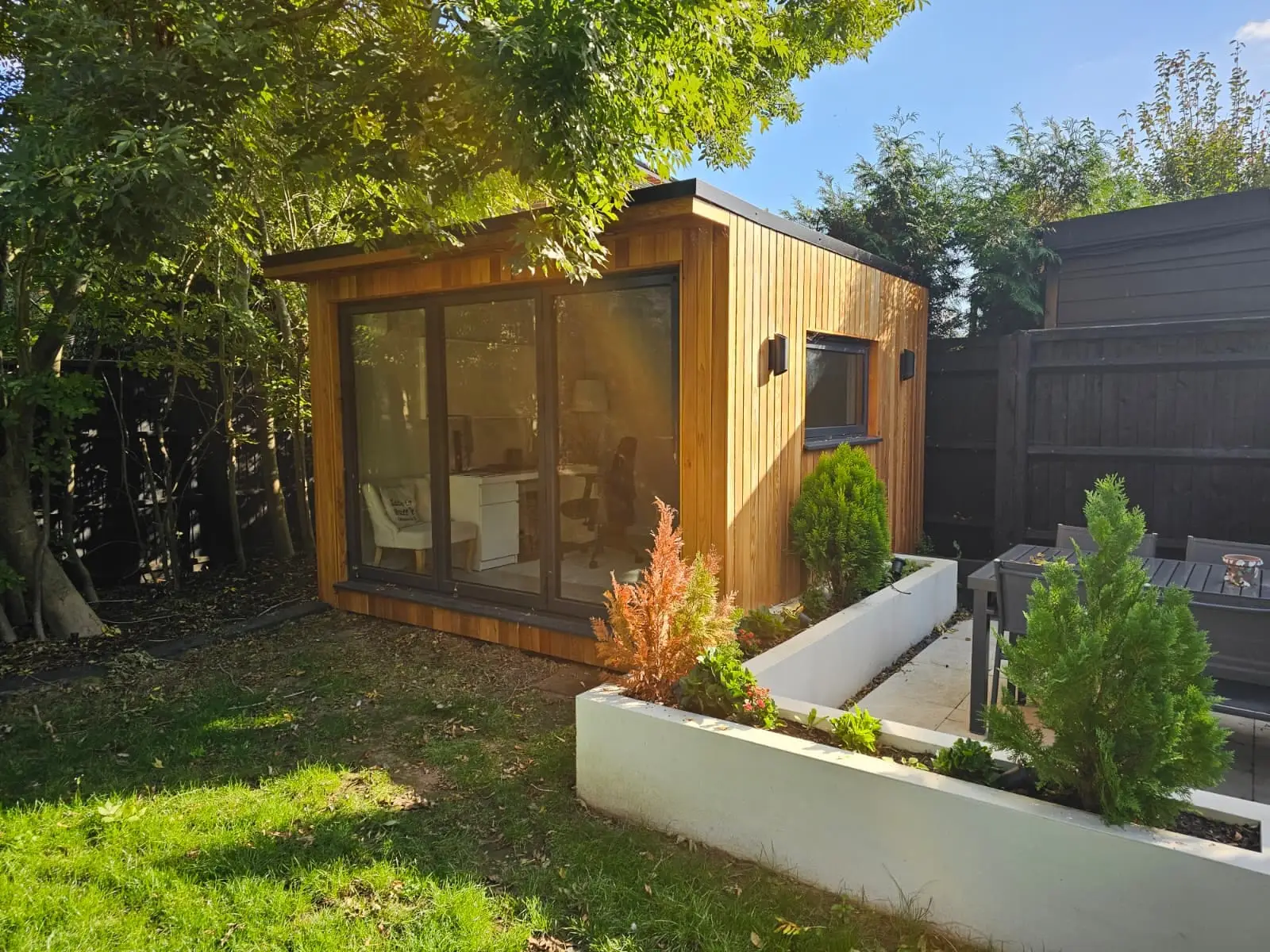
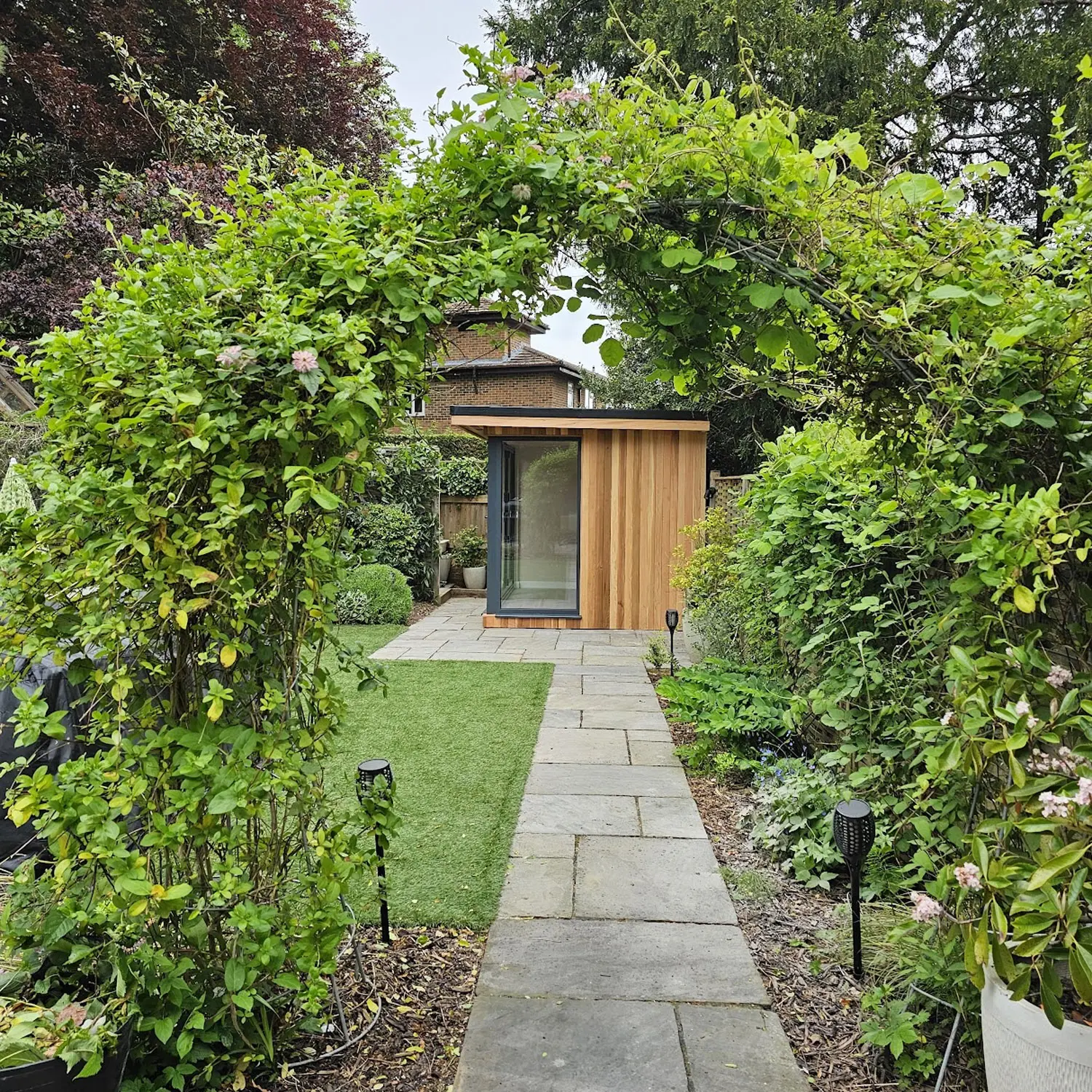
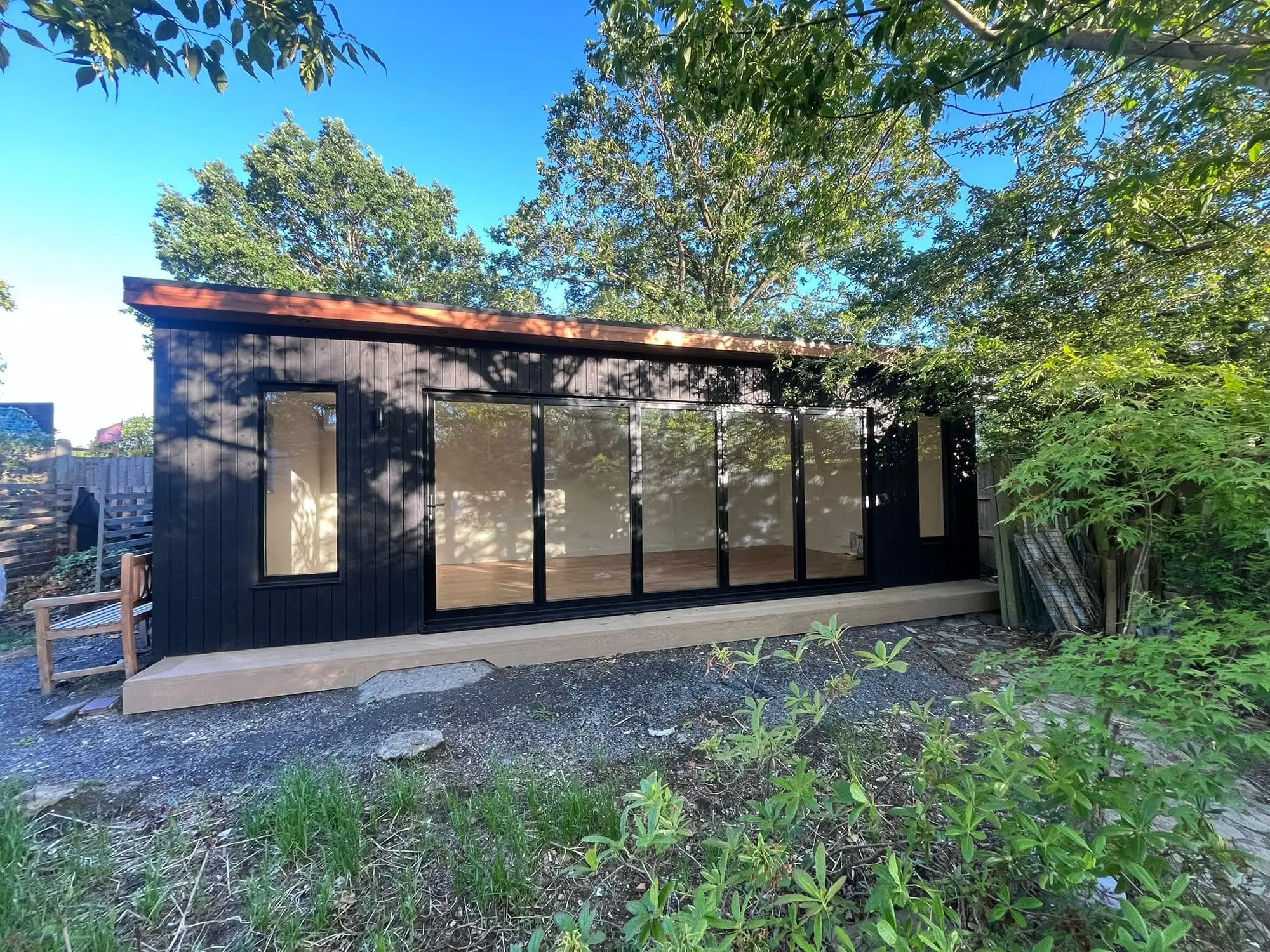
Permitted Development Builds We've Completed
Not Sure About Your Plot?
We'll assess your garden during the free site visit and give you clear, practical advice about what's achievable under Permitted Development — and what to do if planning permission is needed.